Posts

Showing posts with the label history

What’s in a Name? Musings on Ship’s Names and History

Image
16th Century England's Most  Infamous Privateer Ahead of the curve on the handlebar moustache trend. I f you do any research into 16 th maritime history, there’s no denying that Sir Francis Drake was an incredible mariner, explorer, tactician, and businessman. It should also be noted, however, that he got his start as a slave trader, thanks to his earlier association with his cousin Christopher Hawkins. Starting as the son of a tenant farmer, he was able to make his way to the royal court of Queen Elizabeth I. By the age of 40 he had travelled all over the known world and amassed great wealth and fame; he was also the second person to circumnavigate the globe and claimed California for England. As a privateer, he was a national hero as he filled England’s coffers with plundered Spanish gold and silver; to the Spanish, he was known as a dreaded pirate with a bounty on his head. Capturing the Nuestra de Whatever In 1577, Queen Elizabeth asked Drake to attack Spanish s...
Breaking Bread with the Past: Making an 18th Century Dough Bowl

Image
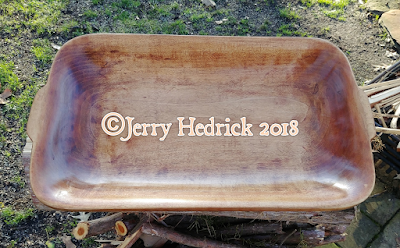
The Art of Chipping Away at a Block of Maple Until Something Useful Appears The finished bowl, ready for use. A dough bowl, also called a kneading trough, is a wooden vessel traditionally used for mixing, raising, and kneading yeast dough for making bread. It was hand carved from a single piece of wood. It could be oval, round or rectangular in shape, and vary in size and width—typically from 24" to 36" long, 10" to 18" wide, and 3" to 8" deep. It often had small handles or grips on either end. Ancient Egyptian tomb paintings often depict bakers using a similar vessel to knead dough for bread making; in literature, they are mentioned as early as 1386 in Chaucer’s The Miller's Tale. This type of dough bowl was typically used by home bakers for small batches of bread; large scale commercial bakeries or bread makers for large households used a much larger, lidded, framed container called a dough box or dough trough. A good dough bowl ...

Knowing the Ropes: A Twist on 18th Century Rope Making

Image
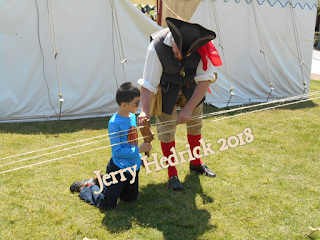
Making and Demonstrating the Art and Craft of Natural Fiber Rope Making Rope making is one of the first and most useful skills developed by humans. It predates other ancient tools and technologies such as the wheel and the ax. Not only was rope necessary for outfitting watercraft, it was needed to secure animals (and other humans), bundle goods, control horses, for tent making, for making simple footwear, and for team-based heavy lifting and pulling. And, in a pinch, holding up your pants. Without rope, the early Egyptians and ancient Chinese would be paddling their barges and feluccas up and down rivers, limiting the distance they could reasonably travel and the weight of goods they could hall. Both strong and flexible, the uses are endless. A rope might not seem very important, but it was critical to the emergence of early cultures around the globe.   Rope making demonstration with a young apprenti ce. Demonstrating 18 th century rope making is one of my favorite acti...